Park Authority
Missed Opportunity

The National Park Authority should include Moorsbus in its funding strategy in a wide-spread and meaningful way.
MOORSBUS and THE NATIONAL PARK AUTHORITY v4
For over 45 years, Moorsbus has played a key role in enabling access to the North York Moors: ‘for all, regardless of wealth or social class’ in the words of the original National Parks’ legislation.
As bus services have diminished over the years, public transport access to the North York Moors is now at its lowest since the Park was designated almost 75 years ago.
Moorsbus has increasingly shouldered sole responsibility for providing accessibility to a large area of the National Park – including its two national park centres. It is responding to climate change, reducing CO2 emissions, improving road safety, contributing positively to health, well-being, social cohesion and supporting the local economy.
For many years, Moorsbus was funded by the National Park Authority, with a contribution from North Yorkshire County Council. Cited as an exemplar of best practice in government reports (both tourism and transport), it was called ‘the best recreational bus service in Europe.’ But all funding from the NPA ceased due to austerity in 2013 and it has not provided any financial support since. This resulted in a group of supporters working to restore its ethos and services.
Today, Moorsbus is run entirely by volunteers from the Moorsbus Community Interest Company, with a supporting group, the Friends of Moorsbus, helping fundraise and provide passenger feedback and suggestions for service improvements. To ensure regulatory compliance and the highest levels of safety, reliability and professionalism, the actual services are contracted with local bus operators. This is in effect a rural franchise with the CIC setting routes, fares, service levels and then contracting with local bus operators to provide drivers and vehicles.
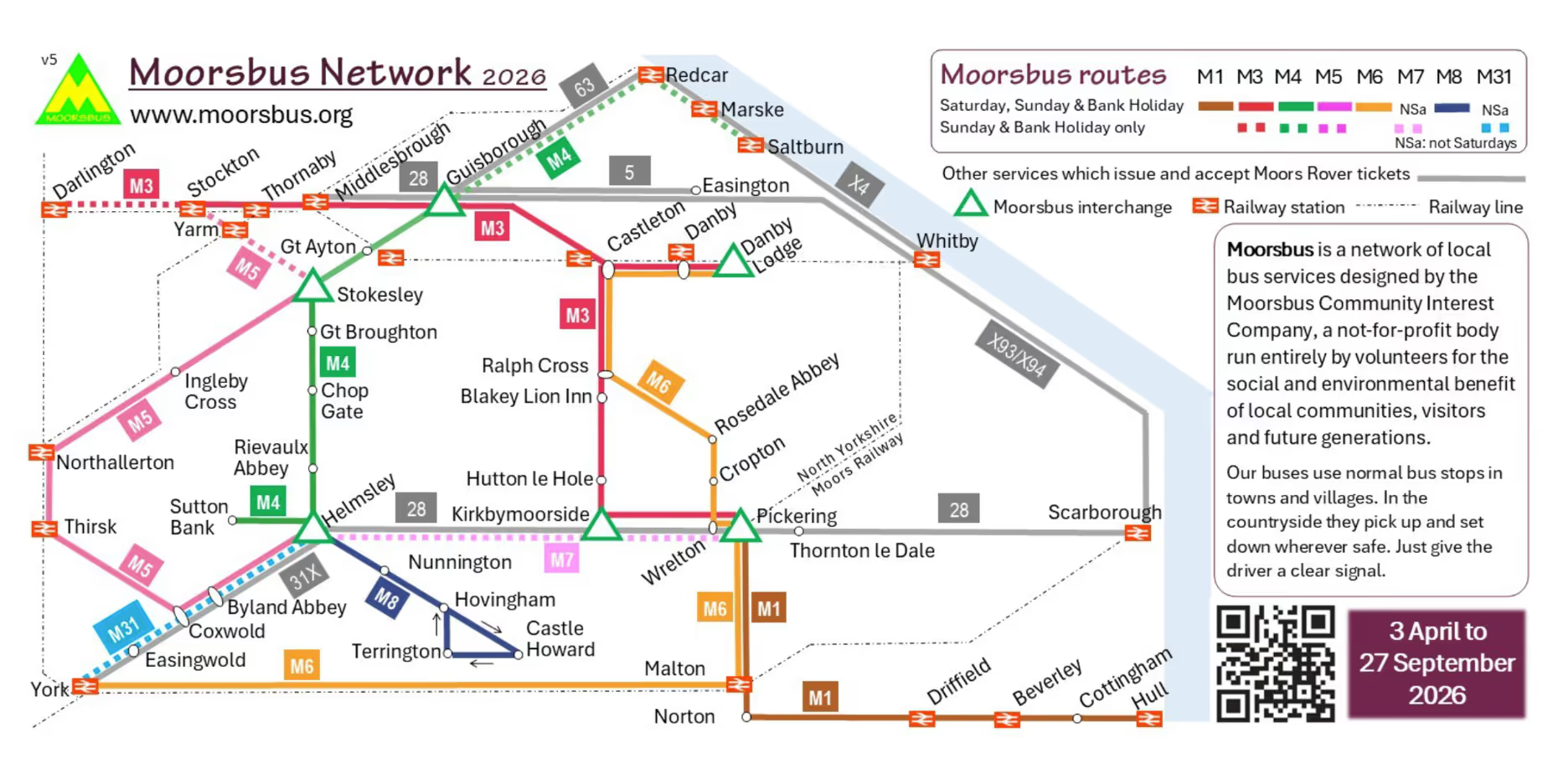
In 2026 the network operated at weekends from April to September on 8 routes from surrounding towns and cities, and within the North York Moors and Howardian Hills. It was funded through a combination of fares, pass reimbursement, donations and grants, including from the York & North Yorkshire Mayoral Authority, Hull City Council, East Riding of Yorkshire Council, the Howardian Hills National Landscape and the North Yorkshire Moors Association. Moorsbus also benefits from small grants from parish and town councils. Surveys show it to be one of the UK’s highest-rated bus operations for passenger satisfaction.
National innovations include the Donate Ticket, whereby passengers (especially those who benefit from ‘free’ travel through a concessionary pass) can make an on-board donation through the ticket system. This has since been copied in other parts of the UK. Moorsbus worked with an artist to create on-bus artwork videos linked to an exhibition at the ‘Inspired by…’ gallery. It has developed MoorRewards to encourage spending in local businesses and created the walk & ride concept. Innovation is embedded in Moorsbus.
Moorsbus offers a cost-effective way of delivering National Park purposes, including key elements of the Authority’s Sustainability Objectives.
Rural transport:
expensive to provide, expensive to use
A sparse rural population can never provide enough passengers to generate a reasonable return without continued investment. This is amplified by the fact that many - but certainly not all - rural dwellers have access to a car, making the cost of providing services for a small population even more expensive.
The elderly or disabled use a national bus pass but as most rural bus journeys are longer than urban ones, this gives a very poor return per pass-user.
There is a level of fares beyond which passengers will not pay. As this cost is shared between fewer passengers, it creates a domino effect: fares become more expensive, beyond the reach of the less well-off, and prohibitive for most. Moorsbus continues to support inclusivity and low fares.
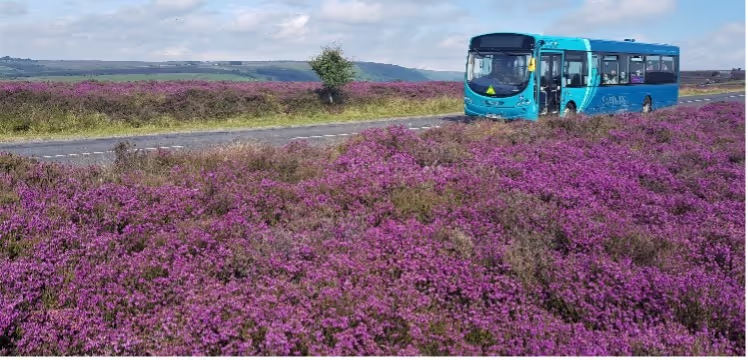
13% of Park households don’t have a car; 38% in Middlesbrough are car-less
Car ownership within the National Park is high. 87% of households own at least one car compared to the regional and national averages of 70% and 73% respectively. But although the household may have a car, it is not necessarily available for use by other members of the household when the car driver is using it. There is an assumption that car ownership is universal, so the 13% of households in the National Park who don’t have a car find services and opportunities even more difficult to access.
Conversely, some urban communities just outside the Park have far lower levels of car ownership (Middlesbrough 62%; Scarborough 71%; Redcar & Cleveland 72%; Darlington 72%; York 74%).
These communities are amongst those who traditionally viewed the Moors area as their cultural inheritance and their ‘breathing space’. Yet many of them are denied access as there is limited public transport to the area. Moorsbus provides some access for these communities, which also have some of the country’s highest social deprivation indices.
Socio-demographic mix:
who doesn’t visit the people’s parks?
It is not just the surrounding urban areas which are restricted in their access. Overseas visitors – a target for the Park – usually rely on public transport. Whilst they may get to York, they find it difficult to penetrate the North York Moors.
In addition, city dwellers are increasingly finding a car a hindrance to city living. But likewise, they may find it increasingly difficult to access the North York Moors.
Often the young and the elderly find that they have either no car, or no driving licence.
Over the last 20 years, surveys of Moorsbus passengers have consistently shown a profile of visitors from the lower socio-economic groups, as well as a more limited number from environmentally-aware upper segments.
The Council for National Parks has said: 'Affordable and reliable transport options are a social justice issue. For too many it's a barrier to enjoying these places and as such we have a massive over-reliance on private cars.’
Sustainability
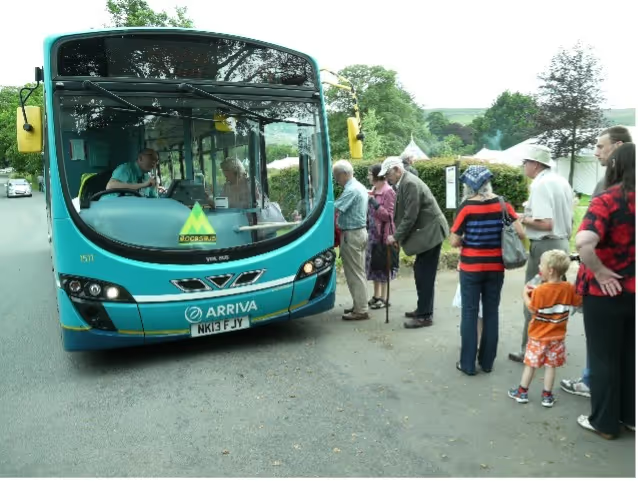
Throughout its planning and operations, Moorsbus works hard to achieve the most effective sustainable balance: locally and globally, now and for the future, involving its passengers and operators in the task.
Environmentally, Moorsbus attempts to reduce car usage by providing a cost-effective alternative for some journeys. This may help in reducing the need for additional parking, road improvements, signage, whilst lessening visual intrusion, congestion and other environmental problems. The buses used are ultra-low-emission vehicles, with timetables planned around safe and smooth operations.
As a Chinese academic who worked with Moorsbus in 2025 concluded: ‘Bus makes sustainability happen. Moorsbus makes sustainability happy’.
Socially, Moorsbus offers a friendly and accessible service which helps combat loneliness and social isolation. especially among the elderly. By encouraging walk & ride, we are helping to improve health and the enjoyment of tranquillity.
Economically, Moorsbus generates thousands of pounds for the local economy, often directing money into smaller establishments in more remote locations.
Understanding visitor patterns
An objective view of who visits the North York Moors and their visiting patterns, has shown us that many visitors ‘graze’ from site to site on their visit, using a variety of attractions, refreshment stops, views and walks as part of their visit. Other swish to undertake a long linear walk of maybe 5 or 6 hours. The routes and timetables try to reflect both these opportunities.
Conversely, there are those who don’t come to the area at all. Moorsbus wants to understand why and give them the opportunity to visit.
Moorsbus acknowledges that all tourism is at some cost to the environment, but the use of public transport and the activities promoted create a smaller carbon footprint than many other approaches.
Moorsbus Community Interest Company 2026
www.moorsbus.org
Greener. Fairer. Better.
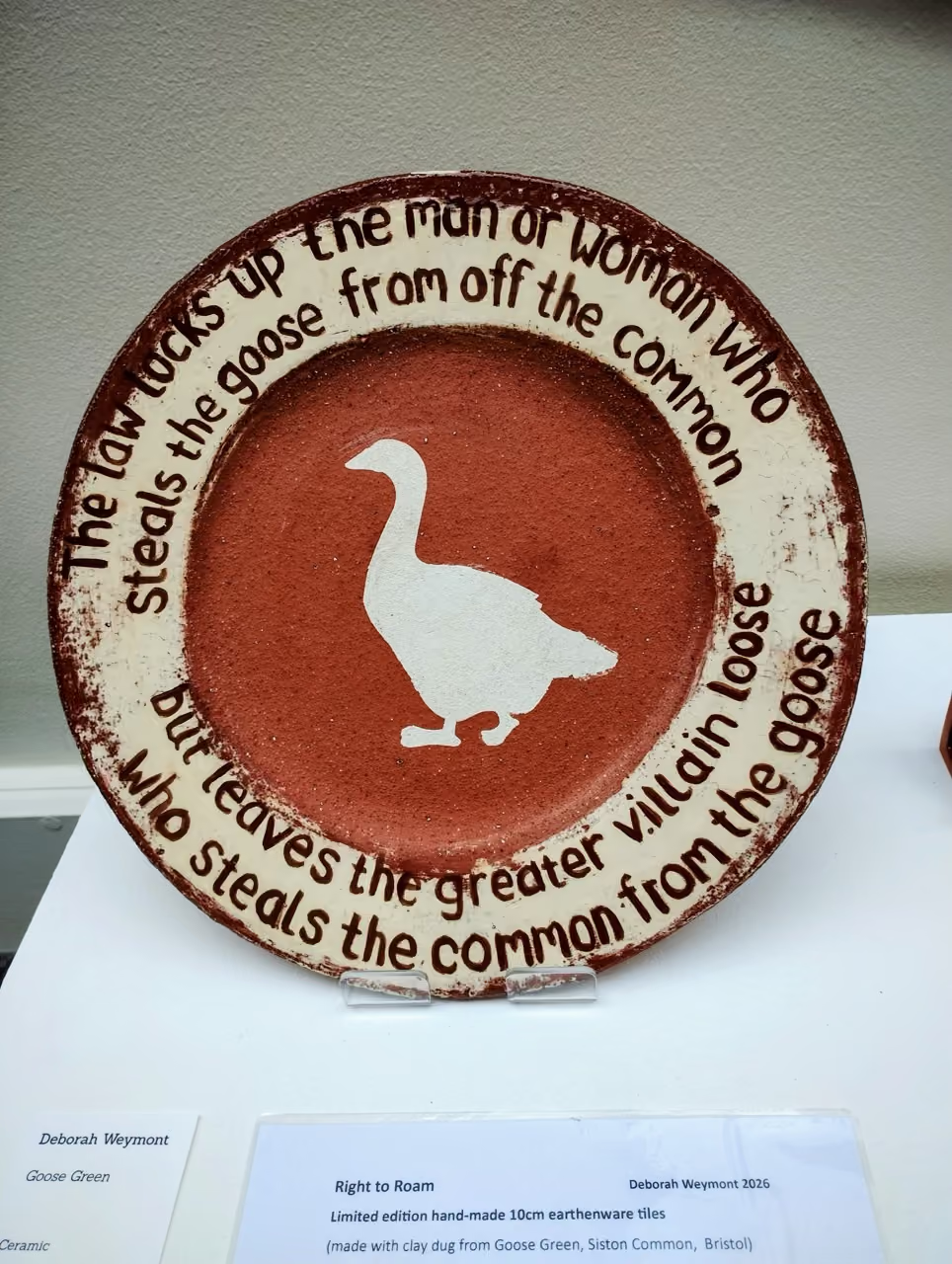
Right to Roam - Deborah Weymont 2026
Please Donate to Moorsbus
Donate to Moorsbus. Every contribution helps us greatly to provide the bus service.
